
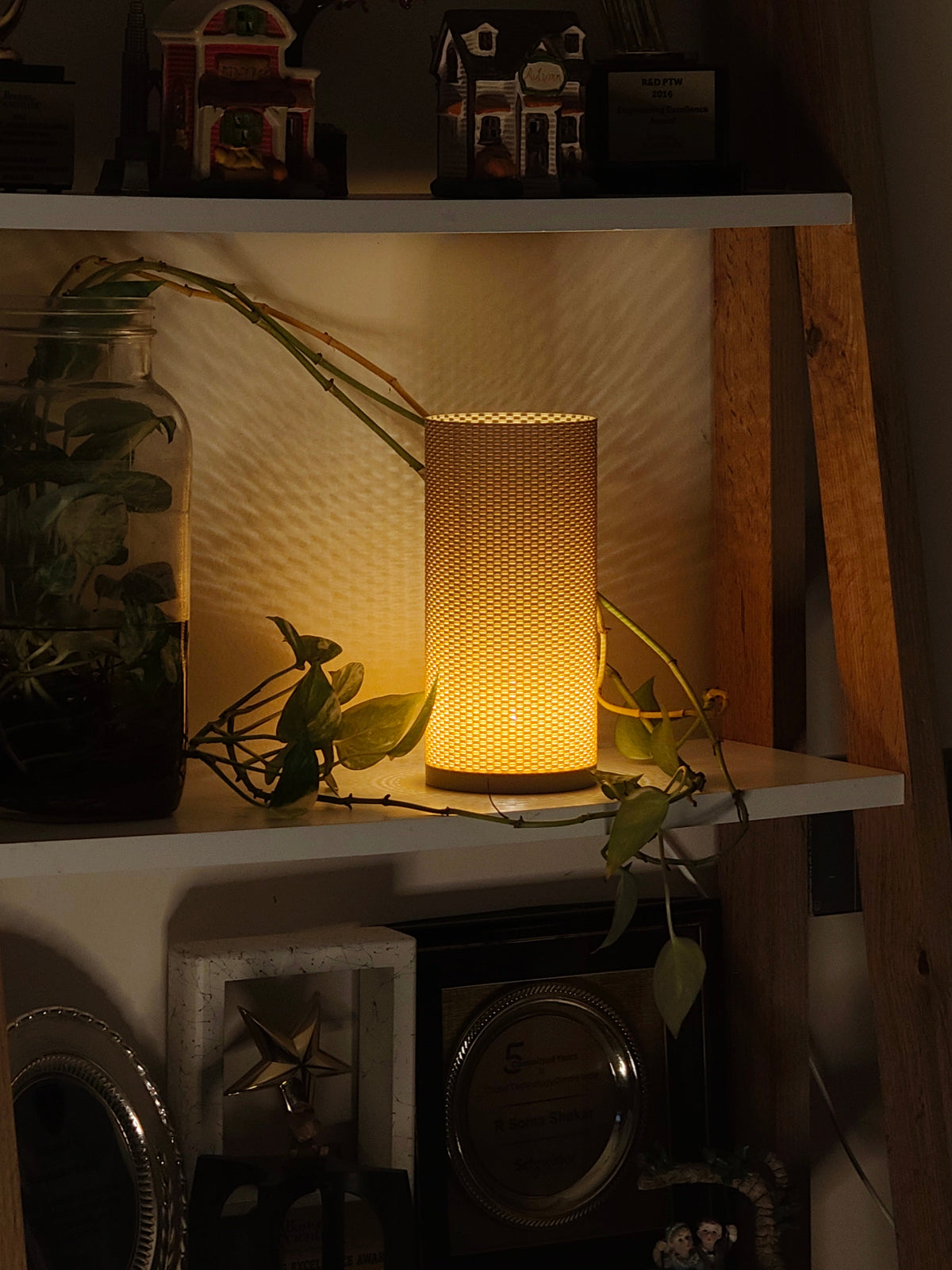
A shelf can hold more than objects. It can hold the mood of a room. In these photographs, the light sits among plants, small sculptures and personal pieces rather than taking over an empty display. The result feels collected over time, with the lamp acting as a quiet centre of attention.
Texture does some of the decorating
The cylindrical shade in the first photograph throws attention onto its own woven-looking surface and the wall behind it. Nearby leaves break up the straight shelf edges. That contrast matters: the lamp brings structure, while the plants keep the arrangement from becoming too formal.
The black slatted lamp in the second photograph creates a different rhythm. Its strong vertical lines read clearly beside the softer foliage and smaller objects. It is a useful reminder that two lamps can belong to the same room without sharing the same silhouette.

The useful trade-off
A densely arranged shelf can also become visually noisy. In the wider view, several pale forms compete for attention. We would leave a small pocket of empty space around the lamp and keep the nearest objects lower than its main silhouette. The aim is to let one piece lead, rather than asking every shelf to make an equal statement.

Try it in your own corner
Start with one lamp, one plant and one object you already care about. Look at the arrangement from the doorway as well as close up. If the lamp disappears among its neighbours, simplify the shelf before adding anything else. A considered corner does not need to look like a showroom; it needs a clear point of focus.